Learn 3DCP · Field reference
3D construction printing glossary.
Clear definitions for the robotics, materials, site preparation, and permitting language behind construction printing.
Quick answer
What is 3D construction printing?
3D construction printing, often shortened to 3DCP, is an automated construction process that deposits cementitious material layer by layer from a digital toolpath. A real 3DCP project depends on motion control, pumpable material, site readiness, QA/QC logs, inspection points, and code review.
Key terms
Five terms to start with.
From the gantry that moves the printhead to the authority that reviews the work, these are the terms that explain how a pilot fits together.
Quick definition
3DCP
three-dee-see-pee3DCP means 3D construction printing. It is a construction automation method that prints walls, panels, forms, or other elements by depositing material in layers from a programmed toolpath.
Quick definition
gantry
gan-treeA gantry is a rigid frame and rail system that moves a printhead along linear axes. In 3DCP, gantries are common because they scale more predictably than large cantilevered robot arms.
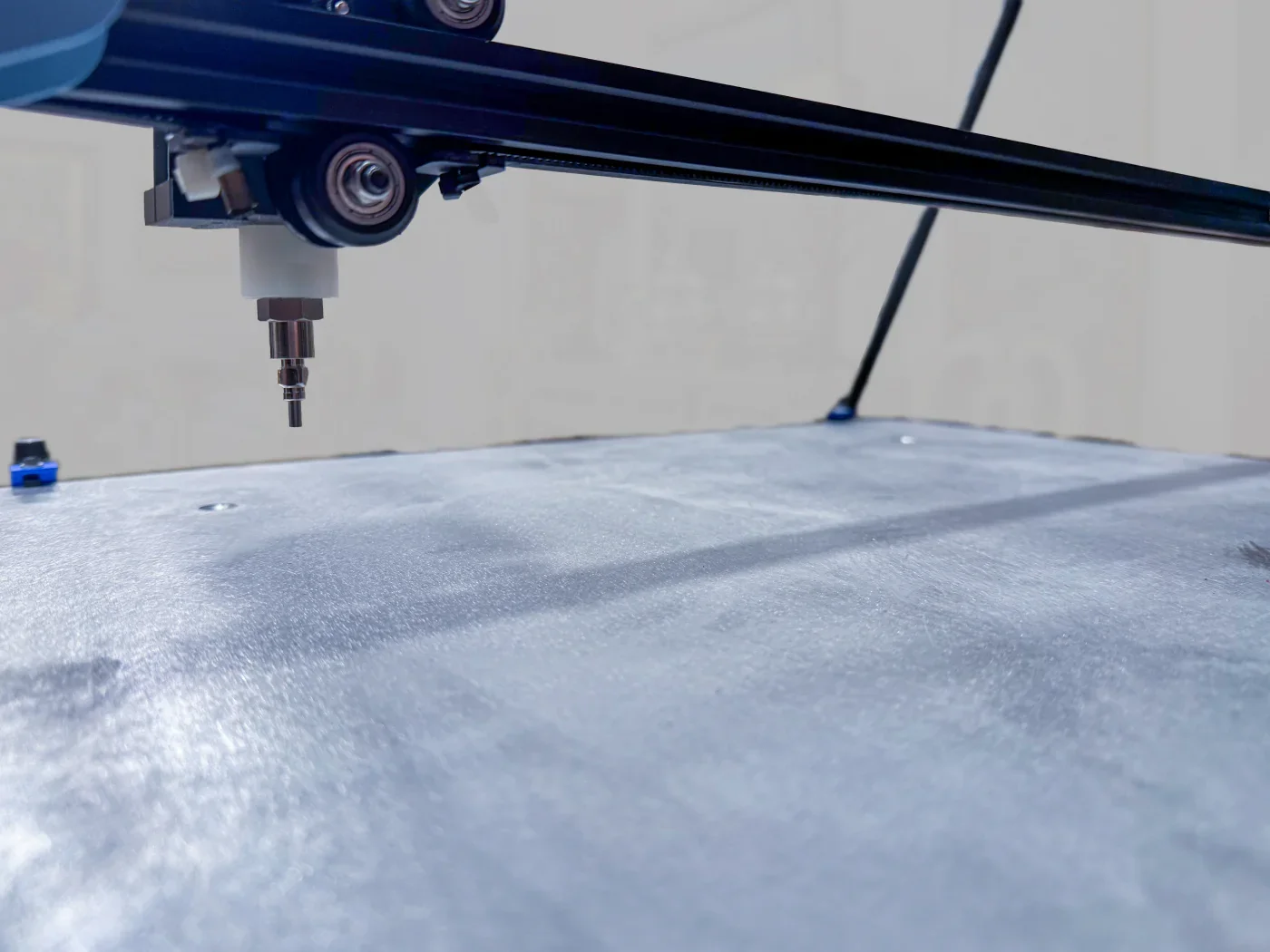
Field note: On long axes, a gantry may need dual motors, auto-squaring, and anti-racking design so the bridge does not twist as it moves.
Quick definition
SCARA
skah-ruhSCARA means Selective Compliance Articulated Robot Arm. It is a fast industrial robot-arm layout, but large 3DCP versions can struggle with cantilever droop, torque, backlash, and complex inverse kinematics.
Why gantry often wins for pilots
A large SCARA arm acts like a horizontal cantilever. As reach grows, the arm and toolhead create torque at the shoulder and elbow joints. A gantry avoids much of that problem by moving along rails instead of holding a long arm in space.
- Gantry systems use simpler Cartesian motion.
- SCARA systems need stronger gearboxes and more compensation as they scale.
- Robotic arms still matter in production cells, tracked systems, and specialty workflows.
Quick definition
thixotropy
thik-sot-ruh-peeThixotropy is the behavior where a material flows under pumping or shear stress, then rebuilds stiffness after the stress is removed.
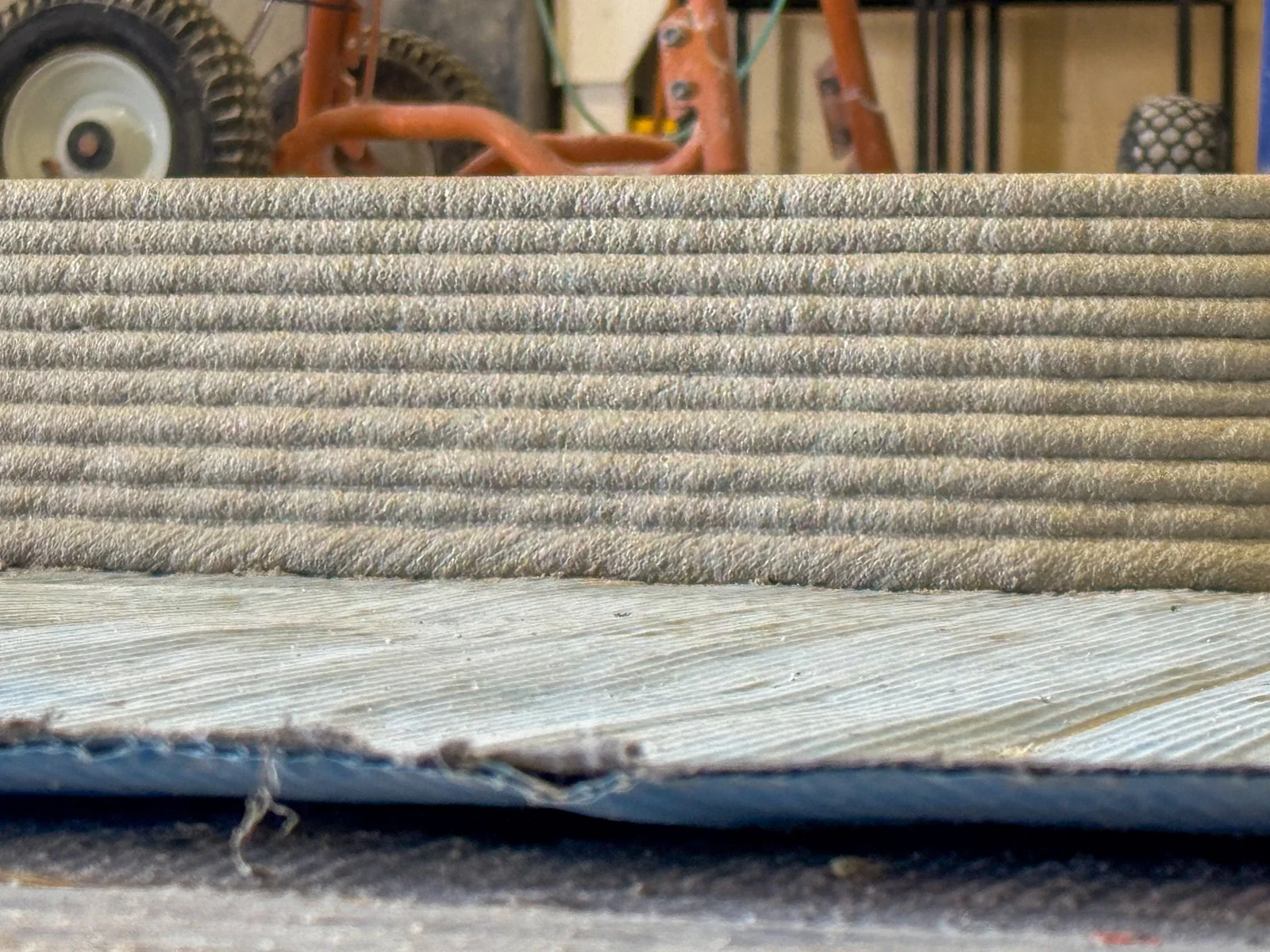
3DCP challenge: The mix must move through the pump and hose without clogging, then recover enough yield stress to support the next layer without slump, bulge, or collapse.
Quick definition
AHJ
ay-aitch-jayAHJ means Authority Having Jurisdiction. It is the local building official, department, fire marshal, or agency responsible for reviewing and enforcing applicable requirements.
What the AHJ usually needs to understand
A 3DCP pilot is easiest to discuss when the team can explain what is being printed, who is responsible, what code path applies, how the material is tested, and how inspection will happen.
- Project scope, drawings, use, and site jurisdiction.
- Engineer-of-record responsibility and structural review path.
- Material data, QA/QC logs, inspection points, and safety plan.
Full glossary
Terms for the field and the shop.
Browse hardware, materials, process control, site readiness, documentation, permitting, and safety.
Material science
Yield stress
Yield stress is the stress threshold a material must exceed before it begins to flow. In 3DCP, the mix needs low enough resistance to pump and high enough resistance to stand after extrusion.
Material science
Slump
Slump is a measure of how much wet concrete deforms under its own weight. Conventional concrete may use higher slump; 3DCP usually needs low-slump or zero-slump behavior.
Material science
Pot life
Pot life is the usable time window before mixed material becomes too stiff or unsafe to pump. Heat, pause time, hose temperature, and water ratio can shorten it.
Material science
Cold joint
A cold joint is a weak interface that can occur when a fresh layer is printed on a layer that has stiffened too much to bond well. Interlayer time is the key control.
Print geometry
Bead width
Bead width is the measured width of the extruded material path. It is affected by nozzle size, pump output, travel speed, material rheology, and layer pressure.
Print geometry
Layer height
Layer height is the vertical height of each printed layer. It must stay consistent enough for bonding, dimensional accuracy, and stable wall build-up.
Print geometry
Interlayer time
Interlayer time is the time between placing one layer and the next. Too short can cause slump; too long can reduce bond and create cold-joint risk.
Print geometry
Corbeling
Corbeling is a method of stepping layers outward gradually so each layer is supported by the layer below. It is one way to approach overhangs without printing into open air.
Structure
Cantilever
A cantilever is a structural element fixed at one end and unsupported at the other. True horizontal cantilevers are difficult in 3DCP because fresh material cannot span empty space by itself.
Material delivery
Progressive cavity pump
A progressive cavity pump moves material through repeating cavities for steadier delivery. In 3DCP, steady flow matters because pressure pulses can change bead shape.
Material delivery
Material skid
A material skid is the mixing, dosing, pumping, and cleaning module that feeds the printer. It may include water dosing, powder feed, pump, hose, sensors, purge plumbing, and flush routines.
Material delivery
Hopper
A hopper holds mixed or feed material before it enters the pump. Agitation, vibration, sensors, accelerants, or retardants may be used to keep the material printable.
Material delivery
Silo
A silo stores dry material in bulk. For pilots, it can reduce hand-bag handling and support forklift-fed super sacks or larger dry-mix workflows.
Material delivery
High-pressure hose
The hose carries material from the pump to the nozzle. Longer hoses require more pressure, add more friction, and increase clogging and pot-life risk.
Motion control
Nozzle
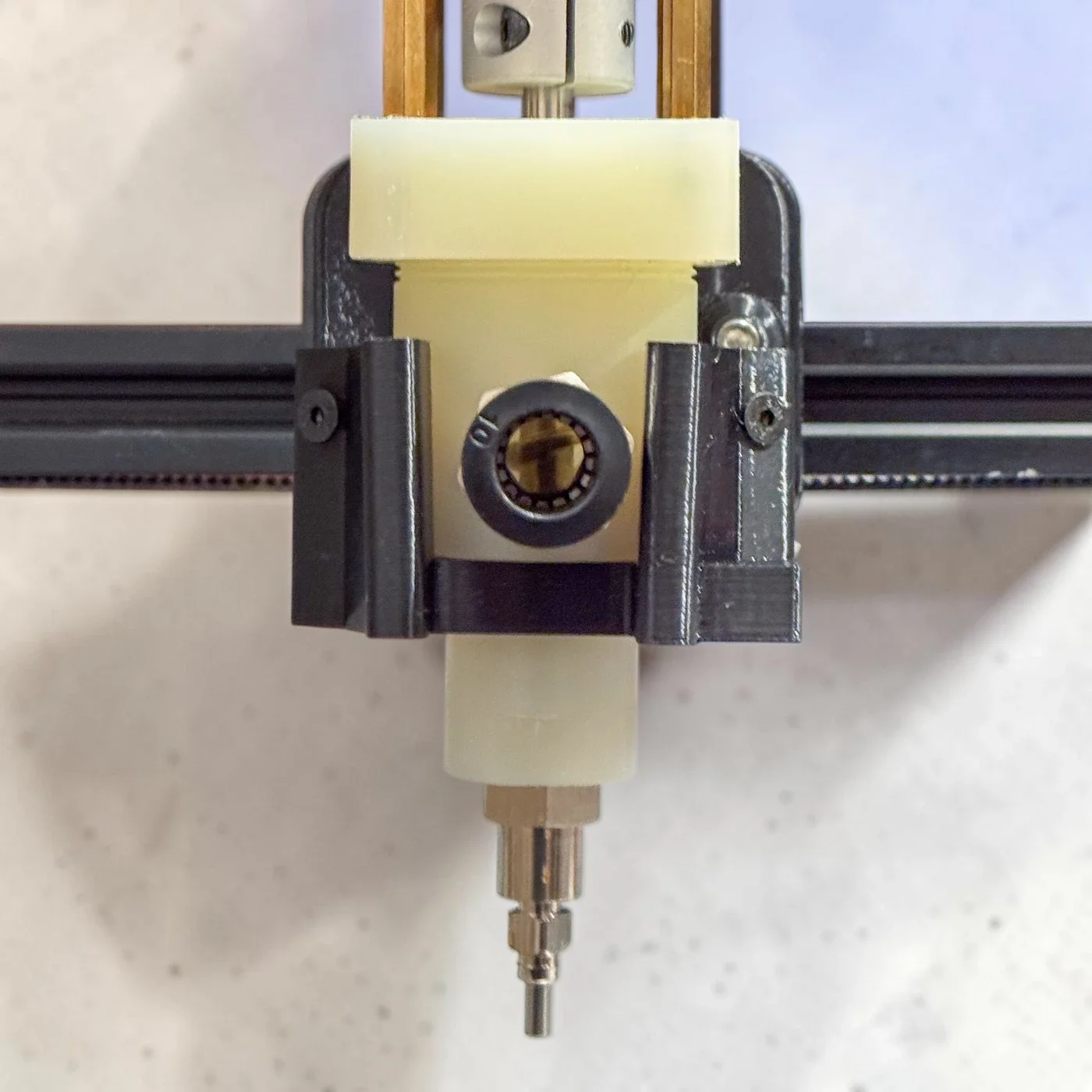
The nozzle shapes and deposits the bead. Nozzle size, height, orientation, and cleanup access all affect print quality and maintenance.
Motion control
G-code
G-code is the machine instruction language that tells the printer where to move, how fast to travel, and when to command material flow.
Motion control
Toolpath
A toolpath is the programmed route the printhead follows. In 3DCP, toolpath planning must consider bead width, corners, starts, stops, pump response, and inspection points.
Motion control
Duet 3 Mainboard 6HC
The Duet 3 Mainboard 6HC is a motion-control board used to coordinate axes, drivers, I/O, macros, and connected control modules in advanced printer builds.
Motion control
CAN-FD toolboard
A CAN-FD toolboard places I/O closer to the toolhead. It can simplify wiring for local sensors, valves, actuators, and serviceable toolhead modules.
Motion control
Rack and pinion
Rack and pinion drive uses a gear running along a toothed rail. It is common at larger gantry scales where long belts or screws become less practical.
Motion control
Racking
Racking is twisting or skewing of a gantry bridge when one side moves differently from the other. Dual motors and squaring routines help control it.
Process control
Pressure transducer
A pressure transducer measures line pressure in the pump or hose. Rising pressure can warn of setting material, partial clogs, water-ratio drift, or hose heating.
Process control
Feedforward plus trim
Feedforward plus trim means commanding pump output from planned bead volume, then applying small corrections from pressure or sensor feedback.
Process control
LiDAR / ToF sensor
LiDAR and time-of-flight sensors can help measure distance, layer height, surface geometry, or safety perimeter conditions when dust, light, and surface quality allow.
Process control
Purge
A purge pushes material through the pump, hose, and nozzle to clear or prime the line. Purge routines help prevent clogs during starts, pauses, and stops.
Process control
Flush
A flush cleans material from the pump line, hose, or nozzle. A good 3DCP skid should make short flush, full flush, and safe-stop routines easy.
Site readiness
Calibration
Calibration aligns the printer's physical motion with its digital commands. Moving robotic arms or field systems offsite may require repeated calibration before reliable printing.
Site readiness
Levelers
Levelers are adjustable supports used to stabilize a printer or frame on site. Large printers may use heavy bases, wheels, or leveling feet to control setup conditions.
Documentation
QA/QC
QA/QC means quality assurance and quality control. For 3DCP, it includes calibration logs, batch records, bead measurements, environmental notes, inspection points, and nonconformance procedures.
Documentation
Documentation binder
A documentation binder is the reusable project file for drawings, material data, print parameters, QA/QC logs, inspection criteria, and safety plans.
Permitting
EOR
EOR means engineer-of-record. The EOR is the qualified professional responsible for engineering review, calculations, and stamped documents when required.
Permitting
Alternate materials and methods
Alternate materials and methods is a code path for reviewing systems that do not fit conventional construction categories. A 3DCP pilot may need this path.
Safety
E-stop
An E-stop is an emergency stop that quickly shuts down hazardous motion or power. A 3DCP printer should treat motion, pump pressure, and site safety as linked systems.
Safety
PPE
PPE means personal protective equipment. Cementitious materials and silica dust can require respirators, gloves, eye protection, wash stations, and dust-control planning.
Safety
Lockout/tagout
Lockout/tagout is a safety procedure for isolating hazardous energy before service. It matters around gantries, pumps, mixers, electrical panels, and pressure lines.
FAQ
Common 3DCP questions.
What is 3D construction printing?
3D construction printing is an automated construction process that deposits cementitious material layer by layer from a digital toolpath. It combines motion control, pumpable material, site readiness, QA/QC documentation, and code review.
Why are gantry systems common in large 3D construction printing?
Gantry systems are common because they scale through fixed linear rails, use simpler Cartesian motion, and handle large print envelopes without the cantilever droop and complex inverse kinematics of large robotic arms.
What does an AHJ need to see for a 3DCP pilot?
An AHJ typically needs a clear project scope, drawings, engineering responsibility, material data, testing plan, QA/QC process, inspection points, and a safety plan before approving alternate materials or methods.
Pilot sequence
Put the terms to work on a first pilot.
Start with lab coupons, small walls, corners, and non-habitable demonstrations. Record measurements, photographs, and lessons from each run in the documentation binder.
Start with small test elements.
Measure
Record bead width, layer height, pressure, cure, and geometry.
Document
Collect QA/QC logs and photographs approved for sharing.