3DCP research · 2026 platform development
A pilot-scale 3DCP platform taking shape component by component.
The program connects full-scale field research with a modified motion platform, clay/paste extrusion hardware, Duet controls and a staged motion-and-material test sequence.
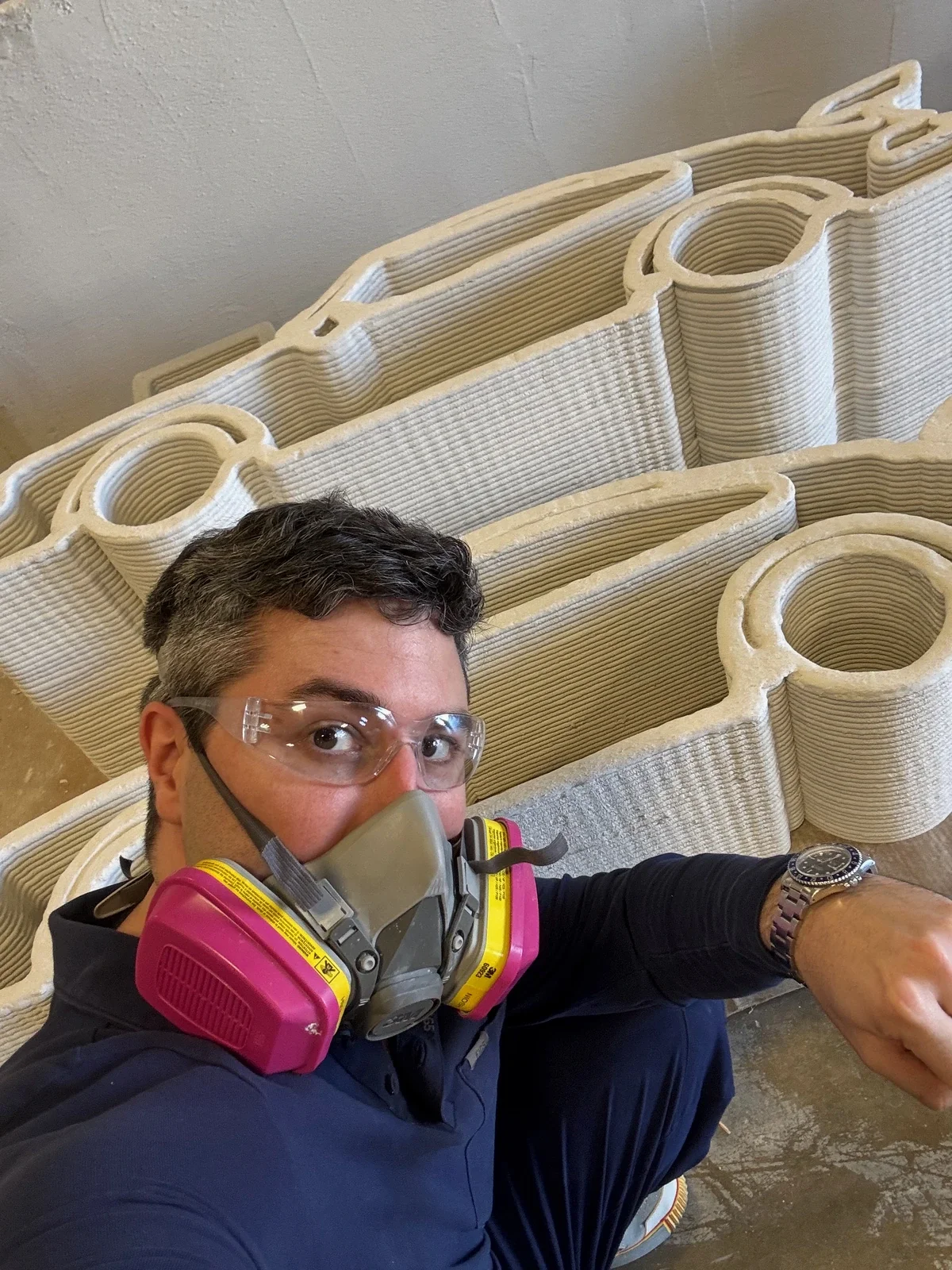
Field research
Start with the material at full scale.
Construction-printing visits and close study of deposited layers give the in-house development program a concrete reference for surface character, bead geometry, machine access and material-handling questions.
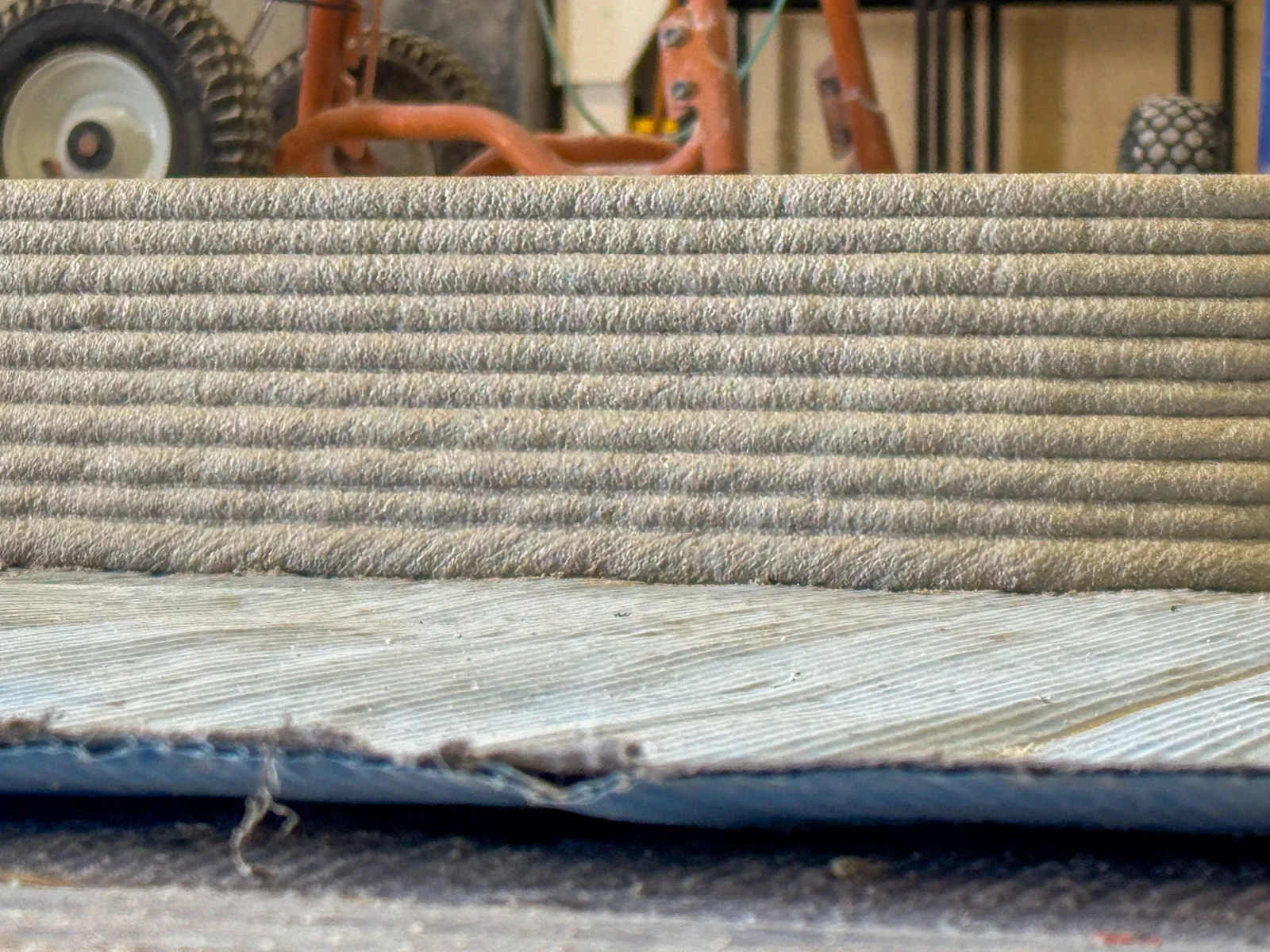
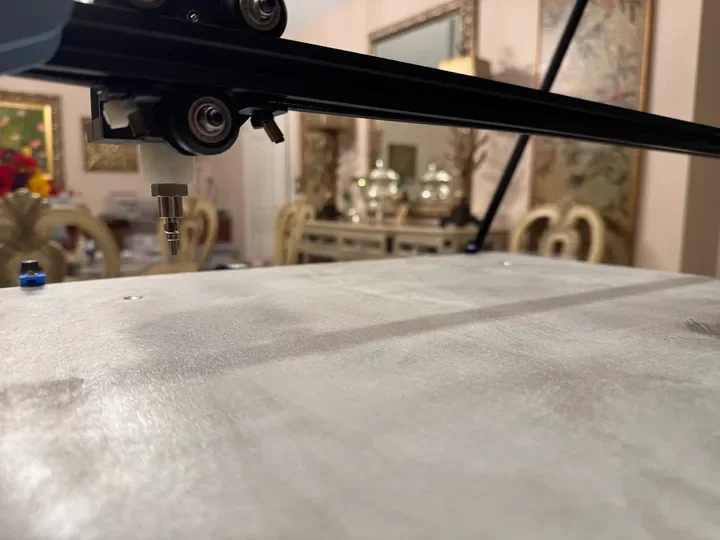
The pilot platform is moving into controlled testing.
The build combines a CR-S5 motion structure, clay/paste extrusion hardware, Duet-based controls, a custom test bed and a defined commissioning sequence.
- Current phase
- Assembly + controls integration
- Program
- Pilot-scale clay / paste extrusion R&D
- Platform hardware
- Frame, gantry, test bed, mounted auger/nozzle and Duet-based control path
- Next milestone
- Controlled motion, named-material extrusion and repeatability testing

Related platform development
A working mechanical system, built component by component.
The EFUGY development lane brings together a custom frame, broad build plate, motion system, extrusion head and printed control-interface components.
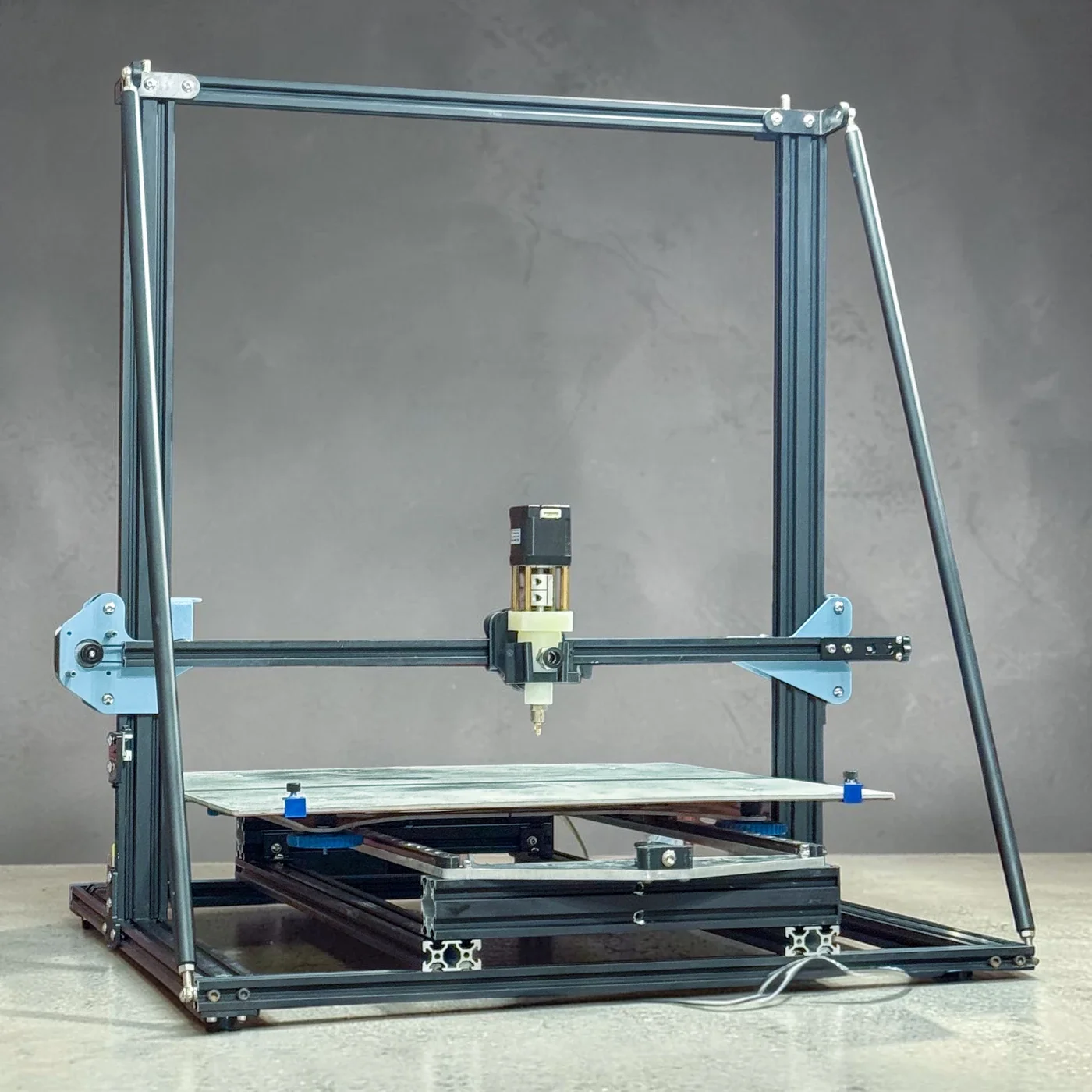
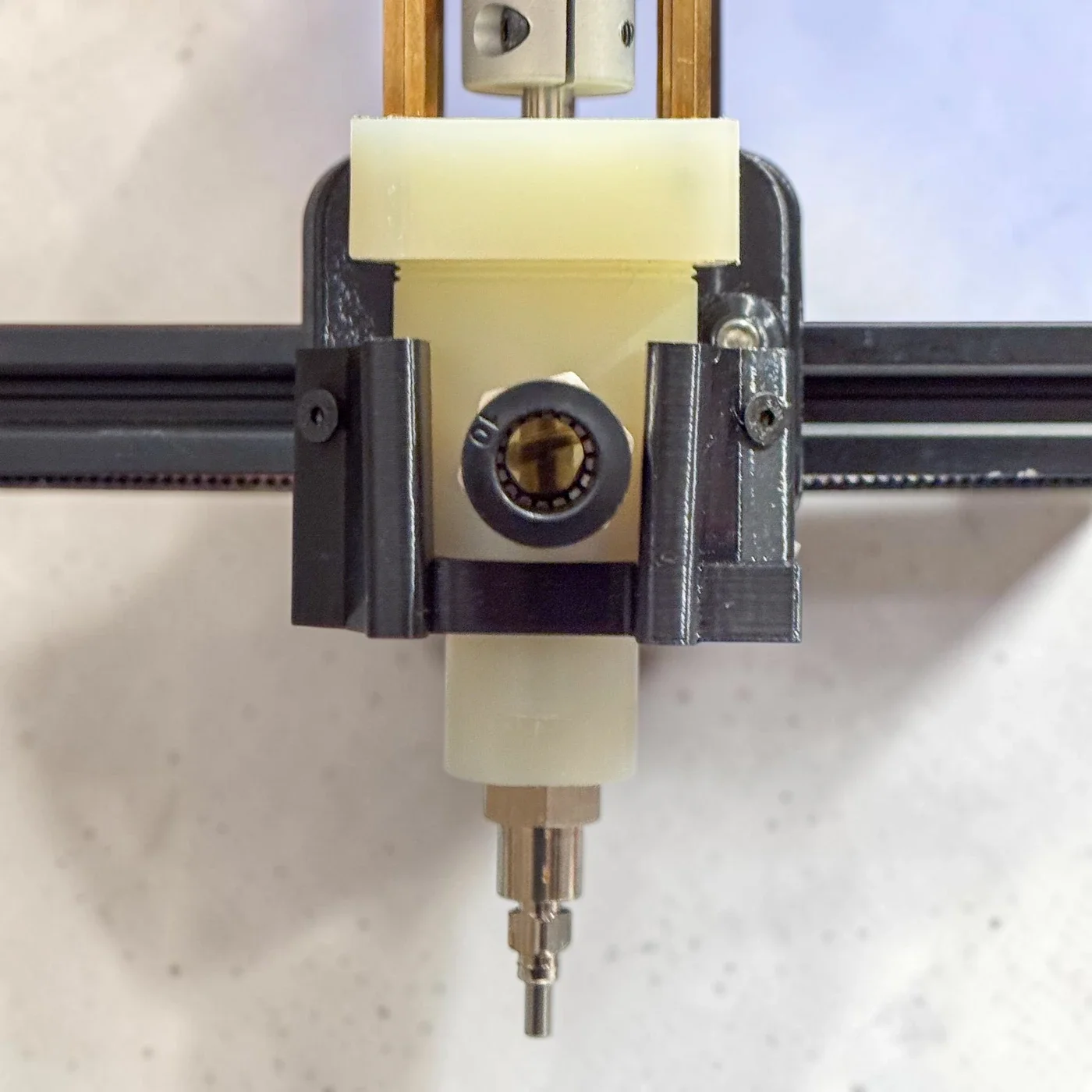
- 3DPC contribution
- Mechanical design, printed components, enclosure design and hardware integration
- Development stage
- Assembled prototype in active development
Platform architecture
A coordinated motion, extrusion and control platform.
The pilot combines a stable working envelope, a serviceable material path and configurable controls. Each subsystem can be refined independently while the machine is evaluated as one complete system.
Structure + motion
Create a controlled working envelope.
The platform supports calibration, repeatable travel and practical access around the machine.
Material delivery
Make the deposited result observable.
The configurable extrusion path supports focused study of flow, bead formation and layer behavior.
Controls + feedback
Keep development runs comparable.
Integrated motion, interface and measurement support help the team evaluate changes across the complete platform.
Development sequence
Build confidence in the order the system needs it.
The program advances from integrated machine behavior to material control, repeatable geometry and a focused application pilot. Each stage defines the most useful question for the next.
01 / Integration
Connect the platform.
Bring motion, extrusion, controls and safety functions into one coordinated system.
02 / Material
Understand the working range.
Study flow, bead formation and layer response under controlled conditions.
03 / Geometry
Compare repeatable output.
Use comparable runs to understand consistency and guide the next machine refinement.
04 / Application
Choose a purposeful pilot.
Select a geometry and scale that answer a clear project question.
3DPC systems perspective
Read the layer. Improve the system.
Layer width, continuity, surface character and transitions show how the material path and machine are working together. 3D Print Construct uses those visible results to decide what deserves the next controlled test.
Advance
Build on a stable result.
Move forward when the deposited result is consistent enough to compare and learn from.
Refine
Strengthen the limiting subsystem.
Return to the machine when one part of the system limits control, serviceability or repeatability.
Scale
Make the larger test earn its place.
Increase geometry or working scale when doing so will answer a clear application-level question.
Useful research ends with a clear next decision.
3DPC turns observed layer behavior, machine response and application goals into a focused pilot brief and a clear next build decision.