Texas custom compute · GPU + AI infrastructure
Custom compute systems built around the workload, cooling strategy and path to scale.
3D Print Construct designs and integrates compute environments for local AI, GPU-intensive work, crypto mining and mixed workloads—from compact on-premises clusters to scalable data-center systems.
- 2022
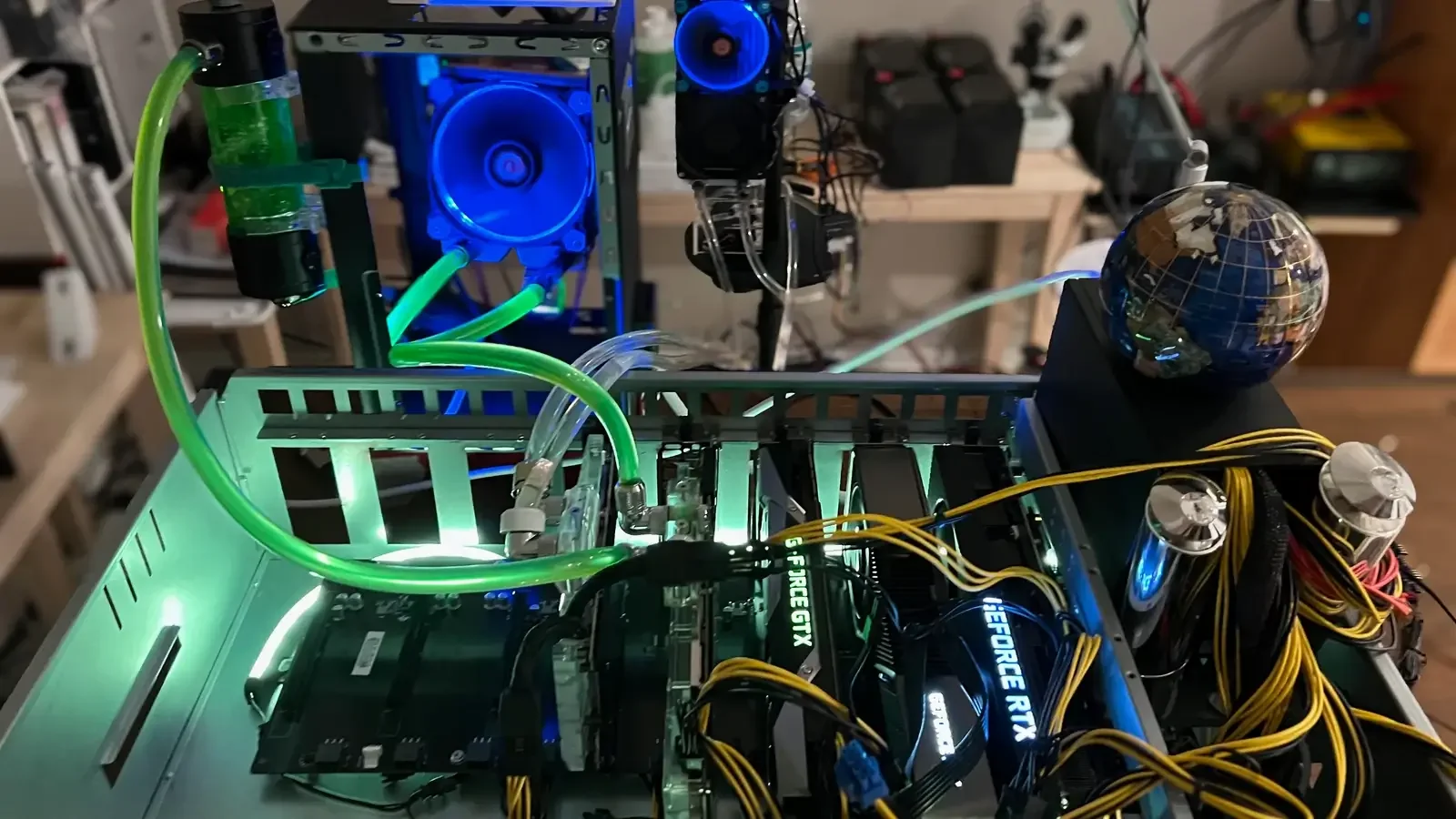
- Liquid-cooled GPU systems
- 4
- Cooling strategies
- AI + GPU
- Workload planning
- Texas
- Primary service region
Built experience
Hands-on engineering from the component level up.
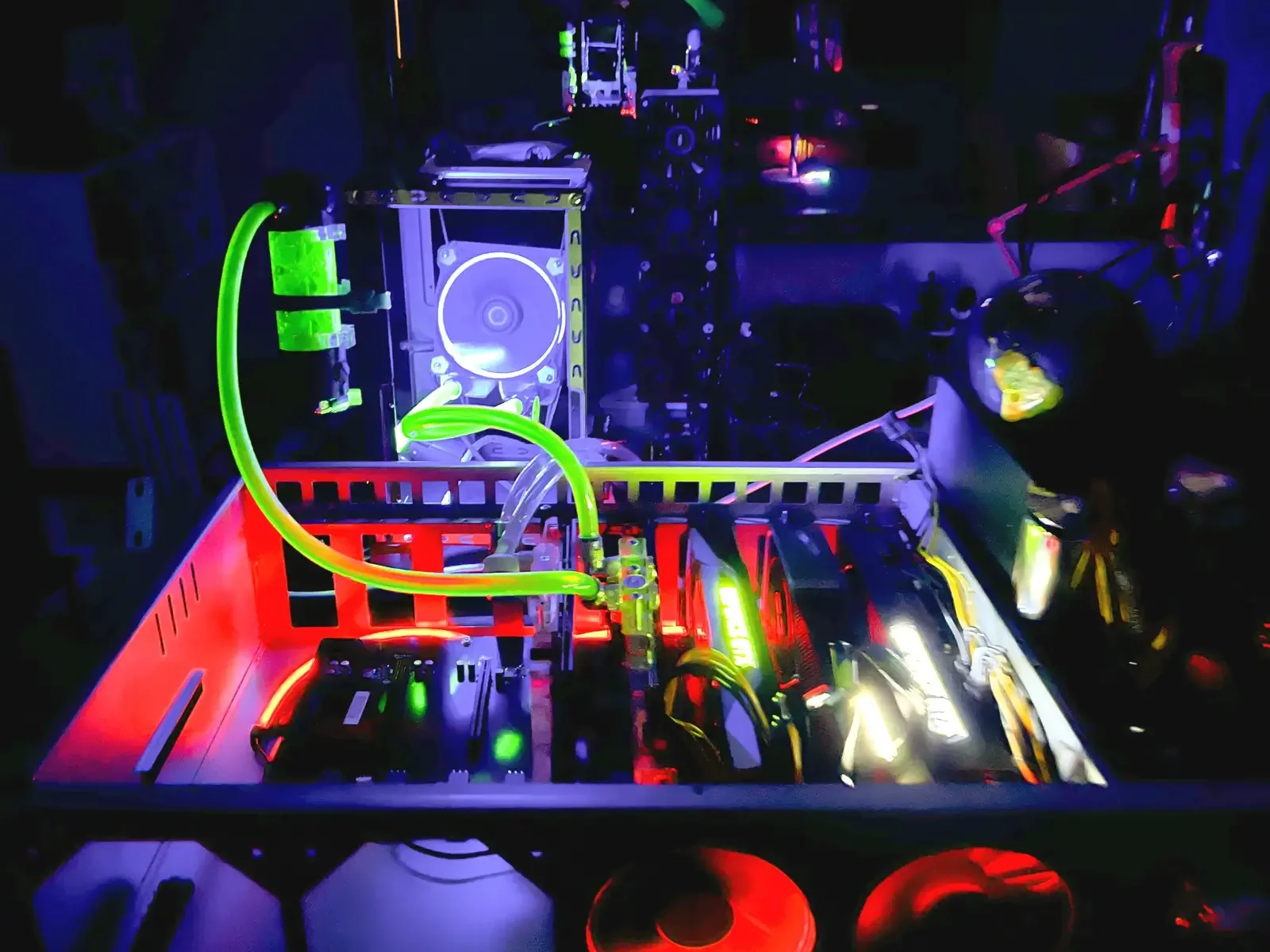
Experience assembling and tuning Ethereum mining systems—integrating custom water blocks, power, cooling and service access—now supports private AI, local LLM, rendering and mixed-compute projects.
- Built
- GPU selection and tuning · water-block integration · liquid-loop layout · component-level assembly
- Applied to
- Private AI · GPU compute · mixed workloads · modular expansion
Workloads
Start with what the system must do.
The architecture follows the workload, data sensitivity, utilization pattern, acoustic target, power envelope and plan for expansion.
Private AI
Local LLM + inference
On-premises systems for model serving, retrieval, experimentation and private workloads that benefit from local control.
GPU compute
Rendering + accelerated work
Multi-GPU systems shaped around memory, interconnect, storage, thermal and utilization requirements.
Crypto compute
Mining-focused systems
Hardware, tuning, power and cooling strategies for mining workloads when the operating model supports the investment.
Mixed use
Partitioned workloads
Separate capacity for AI, compute and mining so hardware can be assigned around changing priorities.
System architecture
Six layers define a dependable compute environment.
The useful conversation is larger than a GPU count. Every layer affects heat, serviceability, resilience and the cost of scaling.
- WorkloadModels, applications, utilization, latency, data sensitivity and growth.
- ComputeCPU, GPU, memory, interconnect and hardware lifecycle.
- PowerService capacity, distribution, protection, metering and backup strategy.
- ThermalAirflow, cold plates, coolant loops, heat rejection or immersion.
- DataNetworking, storage, access control, backup and recovery.
- OperationsMonitoring, maintenance access, spares, documentation and expansion.
Thermal strategy
Cooling is an architecture decision.
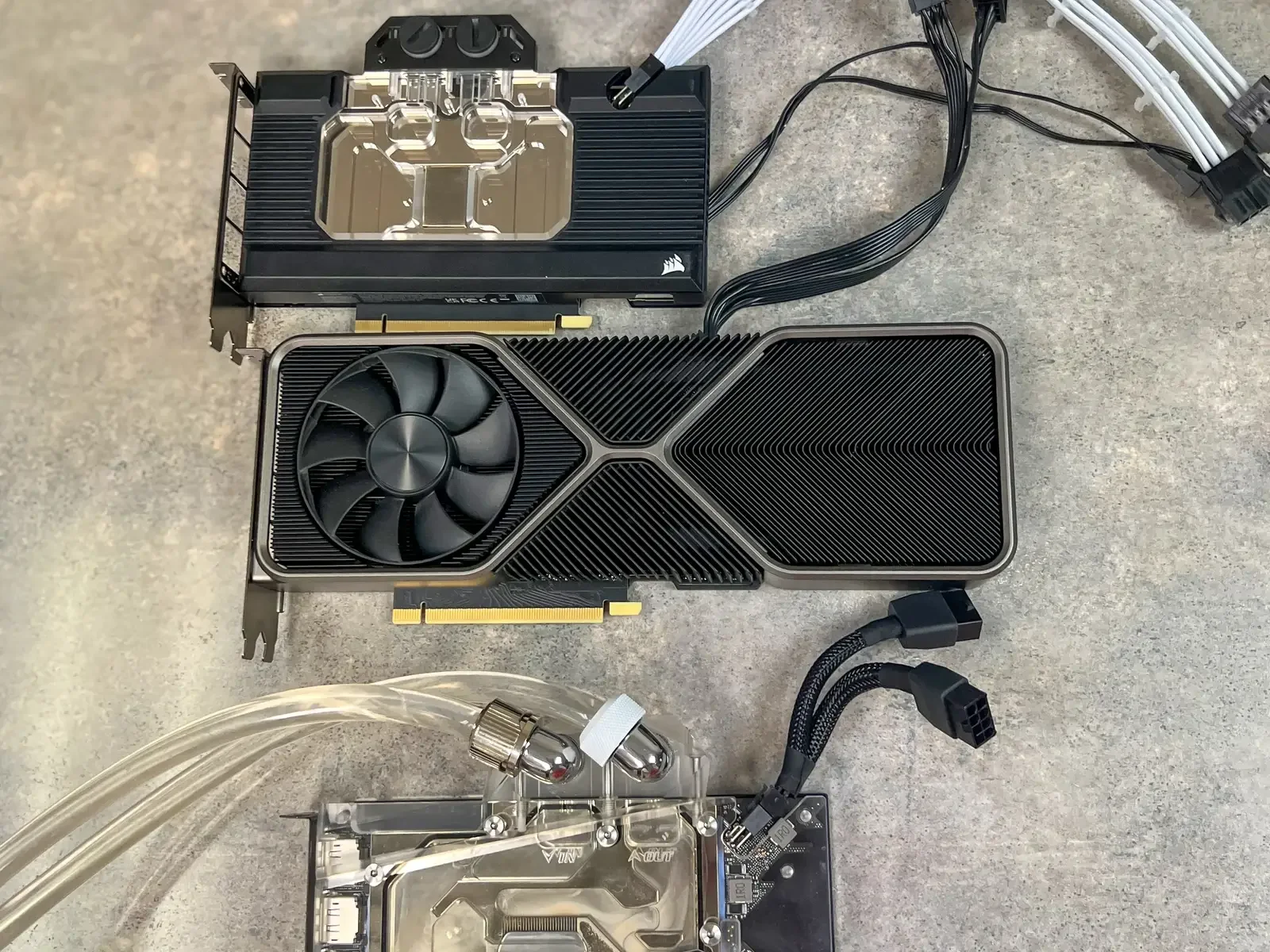
Thermal design changes equipment density, noise, service access, energy use and the way a system can grow. Select a strategy around the actual workload and operating environment.
Air cooled Fast + budget-conscious
Best for lower-density systems and fast initial deployment.
- Plan the airflow path and room heat rejection.
- Control fan noise, dust and hot-air recirculation.
Direct-to-chip liquid Targeted heat removal
Best for high-heat CPUs and GPUs where concentrated cooling matters.
- Coordinate cold plates, pumps or CDU and leak management.
- Preserve radiator, facility-water and service access.
Hybrid liquid + air Mixed hardware
Best when the highest-load components receive liquid cooling while the rest remain air cooled.
- Balance coolant loops with fan airflow.
- Account for the remaining component heat load.
Dielectric immersion Density + acoustic control
Best when full-component heat capture and lower acoustic output are priorities.
- Specify engineered dielectric fluid and compatible materials.
- Plan the vessel, filtration, maintenance and heat rejection.
Scale + delivery
One architecture, sized to the next real step.
Begin with a focused system, a rack-ready cluster or a facility plan that can expand without losing the original workload logic.
Compact
Workstation + edge systems
Purpose-built local AI, rendering or specialized compute with a clear component, cooling and service plan.
Modular
Multi-GPU + rack systems
Repeatable nodes, rack layout, network and storage planning, thermal zones and staged capacity growth.
Facility scale
Partner-led data-center delivery
Compute architecture and system integration coordinated with the electrical, mechanical, network, life-safety and construction specialists responsible for the facility.
Texas deployment
Design for power, heat, operations and growth from day one.
Texas compute projects must connect the workload to real utility capacity, heat rejection, networking, service access and an operating plan that can survive the next expansion.
Technical references Five public sources
Liquid cooling, energy-aware design, open rack systems, AI risk management and Texas large-load coordination.
Bring the workload and the constraints.
Share the target use, hardware already owned, expected scale, power availability, cooling and noise priorities, timeline and budget range.